

To provide for the maintenance of the Niagara Escarpment and land in its vicinity substantially as a continuous natural environment, and to ensure only such development occurs as is compatible with that natural environment.
Annual Business Plan
2025 – 2028
Contents
1. The Niagara Escarpment
1.1 Overview
1.2 Context for this Plan
2. The Niagara Escarpment Commission (NEC)
2.1 Mandate
3. Resources to Deliver
3.1 Budget
3.2 NEC Organizational Structure
4. Priorities for 2025-2028
4.1 Organizational Leadership
4.2 Service Delivery Excellence and Modernization
4.3 Natural Resources Management and Economic Development
5. Performance Measures and Annual Performance Targets
5.1 Organizational Leadership & Governance
5.2 Effective Implementation of NEC Policies
6. Risk Assessment & Mitigation Strategies
7. Inventory of NEC’s Artificial Intelligence (AI) Use
Appendix 1 – Municipalities within the NEP Area
Appendix 2 – Informed Judgement Matrix for Compliance
1. The Niagara Escarpment
1.1 Overview
Spanning 725 kilometres from the tip of the Niagara Region to the top of the Bruce Peninsula, the Niagara Escarpment is one of the world’s most magnificent natural landforms. It comprises over a quarter of Ontario’s Greenbelt and is home to Canada’s longest footpath, the Bruce Trail. Over 450 million years old, the Niagara Escarpment is the source of many of the Greater Golden Horseshoe’s major river systems. It is also one of the last remaining bands of continuous forest cover and natural heritage linkages in southern Ontario. It is also a major source of close-to-market prime agricultural land.
In 1973, the Ontario Government passed the Niagara Escarpment Planning and Development Act (NEPDA) to manage development on the Escarpment. Through the NEPDA, a land-use planning process was put in place and the Niagara Escarpment Commission (NEC) was established. Subsequently, in 1985, the Ontario Government also created the Niagara Escarpment Plan (NEP) to clarify land-use designations, development criteria, and other permitted uses. The NEP area covers 195,000 hectares in portions of 22 local municipalities within seven regions and counties, as well as the City of Hamilton. It also provides the framework for a string of more than 160 parks and open spaces linked by the Bruce Trail.
Figure 1 – History of the Niagara Escarpment Commission and Niagara Escarpment Plan

The role of the NEP in preserving the open-landscape character of the Niagara Escarpment and supporting agriculture is good for business in Ontario. Rural and agricultural communities on the Niagara Escarpment support thousands of jobs and produce food consumed locally and all over the world, contributing millions of dollars annually to the region’s economy. In addition, the Niagara Escarpment is a destination for travelers and residents looking for recreational opportunities, which provides a major annual boost to local and regional economies.
In 1990, the Niagara Escarpment earned global recognition as a United Nations Educational, Scientific and Cultural Organization (UNESCO) World Biosphere Reserve – one of only 18 across Canada. This prestigious designation recognizes the Niagara Escarpment as an internationally significant natural feature that promotes sustainable development.
With the Niagara Escarpment traversing one of the fastest growing regions in North America and projecting a population of more than 14 million by 2051, striking the right balance between development and preservation of this majestic feature has never been more important.
1.2 Context for this Plan
The Niagara Escarpment Commission (NEC) is a non-board governed agency of the Ontario Government, that is administered under the Ministry of Natural Resources (MNR). Like other provincial agencies and boards, it functions under the Agencies and Appointments Directive, which sets out reporting relationships, business processes, and accountability requirements. The Directive requires that a business plan be prepared annually for a minimum three-year period and submitted by the Chair of the NEC to the Minister of Natural Resources (MNR). Provincial agencies are accountable to the government through the responsible minister. They must use public resources efficiently and effectively to carry out their mandates, as established by their respective constituting instruments.
The following are the updated requirements for business plans, as outlined in the Agencies and Appointments Directive and supporting guidance materials:
- Detailed description of the mandate;
- Proposed budget for a three-year period;
- Number of employees, expressed as full-time equivalents, who are assigned as staff at the beginning of the three-year period;
- Performance measures and targets to be used to evaluate effectiveness and efficiency;
- Risk Assessment for the three-year period;
- Use of Artificial Intelligence (AI); and
- Any other legislatively required content.
This business plan covers a three-year period, which aligns with the fiscal year for the NEC: April 1, 2025 to March 31, 2026, April 1, 2026 to March 31, 2027 and April 1, 2027 to March 31, 2028. The NEC will continue embracing innovative opportunities that support new ways of doing business, continue to simplify processes and make services more accessible, transparent, and efficient for NEC clients and the general populace.
The three years encompassed by this business plan continue the focus on opportunities to modernize, digitize and streamline program delivery to enhance the client experience and allow staff to focus on complex applications and protection measures. NEC will also work closely with MNR, with a focus on legislative and regulatory enhancements.
2. The Niagara Escarpment Commission (NEC)
The NEC was established in June 1973. It is a regulatory agency that operates at arm’s length from the provincial government, in accordance with the Niagara Escarpment Planning and Development Act (NEPDA), and the Ontario Government’s Agencies and Appointments Directive (AAD).
The NEPDA established the planning framework for the NEP, which the NEC administers so that development on the Niagara Escarpment meets the purpose and objectives of the NEP. The Commission also makes recommendations to the provincial government on NEP policies and amendments. The Commission reports to the Ontario Legislature through the Minister of Natural Resources via a Memorandum of Understanding (MOU).
The NEC conducts itself according to the standards of the Ontario Government, including the principles of ethical behaviour, excellence in management, diversity, anti-racism and inclusion, careful and prudent administration of public funds, and a professional public service that is transparent, responsive, fair, and respectful.
The NEPDA also identifies the composition of the Commission as consisting of 17 Commission members that are appointed by Order-in-Council. Nine members, including the Chair, represent the public at-large, and eight municipally-sponsored members represent the counties, cities, and regions within the NEP area. For a current listing of Commission members, please visit NEC’s website (https://escarpment.org/). A listing of municipalities found within the NEP area is contained in Appendix 1.
The Commission meets regularly to consider certain Development Permit Applications, land-use proposals, policy items, and NEP amendments. Commission meetings are open to the public. They are held in a hybrid format consisting of video conferencing (via Microsoft Teams) and in person boardroom attendance at the NEC’s main office in Georgetown, Ontario.
2.1 Mandate
The Commission is responsible for administering the NEP and a system of Development Control. Since the approval of the plan in 1985, its implementation and the processing of Development Permits and providing recommendations on NEP amendments as well as Park Management Plans for the Parks and Open Space System (publicly owned land in the NEP area) have been the Commission’s ongoing responsibility.
The purpose of the NEPDA is:
“To provide for the maintenance of the Niagara Escarpment and land in its vicinity substantially as a continuous natural environment, and to ensure only such development occurs as is compatible with that natural environment.”
The NEP emerged from the planning process established by the NEPDA and serves as a framework of objectives and policies to strike a balance between development, protection and the enjoyment of this important landform feature and the resources it supports. The NEP shares the same purpose as the NEPDA and seeks to protect the geologic feature of the Niagara Escarpment and lands in its vicinity substantially as a continuous natural environment while only allowing for compatible development. The objectives of the NEP are:
- To protect unique ecological and historical areas;
- To maintain and enhance the quality and character of natural streams and water supplies;
- To provide adequate opportunities for outdoor recreation;
- To maintain and enhance the open landscape character of the Niagara Escarpment in so far as possible, by such means as compatible farming or forestry and by preserving the natural scenery;
- To ensure that all new development is compatible with the purpose of the NEP;
- To provide adequate public access to the Niagara Escarpment; and
- To support municipalities within the NEP Area in the exercise of the planning functions conferred upon them by the Ontario Planning Act.
The NEP is a living document which is periodically reviewed, amended, and renewed. The current NEP came into effect on June 1, 2017. The most recent review was coordinated with the review of three other provincial land-use plans that manage development in Southern Ontario: The Greenbelt Plan, the Oak Ridges Moraine Conservation Plan, and the Growth Plan for the Greater Golden Horseshoe.
Furthermore, all agencies of the Ontario Government are subject to a mandate review every six years, led by Treasury Board Secretariat. A review of the NEC was completed in 2018 and it concluded that the mandate was being implemented appropriately. The MNR will complete an updated mandate review by March 31, 2024, which may influence future business plans.
3. Resources to Deliver
The NEC is a non-revenue generating agency that is funded through financial and employee allocations provided by the MNR.
3.1 Budget
The NEC is committed to achieving operational excellence through effective and efficient use of public resources to carry out its mandate.
The NEC does not operate on a cost recovery model and Commissioner per diems, staff salaries, wages and benefits and all operational costs are fully funded by the MNR. The forecast in Table 1 reflects current rate of inflation increases.
Commissioner per diems are paid as per Schedule B of the Agencies and Appointments Directive. The Commission meets on a monthly basis and enables Commissioners, permit applicants and interested parties to attend in person or virtually. The NEC provides quarterly reporting on Commissioner and Chair travel expenses through its website.
Recommendations contained within the Value for Money Audit: Conserving the Niagara Escarpment (2022), published as part of the 2022 Annual Report from the Office of the Auditor General of Ontario identified that the MNR should evaluate the financial and staffing resources needed to implement the NEPDA and NEP effectively and efficiently. The ministry will continue to evaluate resource requirements over the coming three-year period and will seek to adjust where required.
Table 1 – Estimated Annual Allocations for 2025 – 2028
|
Forecasted |
||||
|
Standard Account |
Budget Allocation |
2025-2026 |
2026-2027 |
2027-2028 |
|
Salary and Wages * |
$2,254,000.00 |
|||
|
Management (Director & Managers) |
$446,300.00 |
$460,000.00 |
$474,000.00 |
|
|
OPSEU and AMAPCEO Staff |
$2,230,000.00 |
$2,296,900.00 |
$2,365,800.00 |
|
|
TOTAL |
$2,676,300.00 |
$2,756,900.00 |
$2,839,800.00 |
|
|
Employee Benefits ** |
$325,200.00 |
$428,200.00 |
$441,100.00 |
$454,400.00 |
|
Salary, Wages and Benefits TOTAL |
$2,579,200.00 |
$3,104,500.00 |
$3,198,000.00 |
$3,294,200.00 |
|
Transportation and Communications * |
$43,000.00 |
$45,000.00 |
$46,350.00 |
$47,750.00 |
|
Services * |
$91,100.00 |
|||
|
Commissioner Per diems |
$186,000.00 |
$191,500.00 |
$197,250.00 |
|
|
Permitting System Fees & Maintenance |
$410,000.00 |
$422,300.00 |
$435,000.00 |
|
|
NEC Fleet |
$15,000.00 |
$15,450.00 |
$15,900.00 |
|
|
Miscellaneous Services |
$42,000.00 |
$43,260.00 |
$44,560.00 |
|
|
TOTAL |
$653,000.00 |
$672,510.00 |
$692,710.00 |
|
|
Supplies and Equipment * |
$31,000.00 |
$31,000.00 |
$31,950.00 |
$32,900.00 |
|
ODOE TOTAL |
$165,100.00 |
$729,000.00 |
$750,810.00 |
$773,360.00 |
|
GRAND TOTAL |
$2,744,300.00 |
$3,833,500.00 |
$3,948,810.00 |
$4,067,560.00 |
* Forecasting based on 3% increases
** Employee benefits forecasted at 16% of salaries
3.1.1 NEC – Other Funds
With the approval of the NEP in 1985, the Niagara Escarpment Land Acquisition and Stewardship Program (NELASP) was created. The Ontario Heritage Trust (OHT) was assigned the responsibility of administering the program, which was to accept contributions from donors for the purpose of land acquisition and stewardship activities.
While the program was terminated in 1998, the financial administration and assistance provided by the OHT to the NEC continues through a series of OHT Board approved “Component B Trust Accounts”, which are directly managed by the NEC. The OHT receives and flows funds for NEC projects based on NEC-approved revenues and expenditures.
The NEC’s reliance on these accounts continues to diminish. The NEC will continue to operate in a fiscally responsible manner in the use of any of the funds over the next three fiscal years.
Table 2 – shows the current OHT accounts, their purpose, and the corresponding account balance as of September 30, 2024, for the 2024-25 fiscal year.
|
Account Name |
Purpose |
Balance |
|
Leading Edge |
Fund outreach, education, and conferences to promote work of the NEC and the Niagara Escarpment Biosphere Network. |
$1,514.43 |
|
ONE Monitoring Program |
Fund NEC’s ONE monitoring program and historically special projects related to the biosphere reserve. |
$22,550.47 |
|
Publications |
Fund marketing and promotional materials. |
$12,483.05 |
|
Joint Agency Review Team (JART) |
Dufferin Aggregates provided a letter of credit for $25,000. The funds can be used by the NEC to retain a third-party consultant to undertake an expert peer review of any reports provided by Dufferin or other agencies in connection with the Adaptive Management Plan (AMP) for the Acton Quarry. The funds cannot be used for any other quarry.
An additional $30,000 was deposited in 2023 prior to the commencement of below water table extraction in Phase 4 of the Dufferin Acton Quarry operation as per the Agreement with Dufferin. |
$55,000.00 |
3.2 NEC Organization
The NEC is supported by a team of employees seconded from the MNR. Most NEC employees work from one of two primary offices, located in Georgetown (Halton Hills) or Owen Sound. However, NEC staff also have a presence in the MNR Vineland office.
3.2.1 NEC Organizational Structure
The NEC’s maximum staffing complement is 24 Full Time Equivalent (FTE) positions. In 2024, the NEC was approved for a one-year temporary increase to compliment by two FTE roles, specifically designated to the compliance program. These additional resources were added on a temporary basis to assist with ongoing compliance files and to develop a new compliance framework. As a result, as of January 1, 2025, the NEC has 26 FTE employees (24 permanent, 2 temporary), 20 assigned to the Georgetown work location and 6 to the Owen Sound work location. In addition, the Georgetown office has three seasonal Planning positions, one seasonal Compliance position, and up to six Youth Programs positions (Intern and summer student positions), which are not considered FTE positions.
The 26 FTEs include one Director (executive), two Managers and 23 bargaining represented positions. The Director reports to the Deputy Minister of the MNR. The two Managers, three Senior Strategic Advisors and the Executive Services Administrator all report to the Director. The Planning Manager leads a team of nine FTEs and three seasonal positions comprised of planning staff. The Manager of Program Services leads a team of 10 FTEs and one seasonal position comprised of various functions including business and finance, geographic information system, information management, and information technology (GIS/IM/IT), landscape architecture and communications and marketing. This team also carries out the compliance function as legislated under the Niagara Escarpment Planning and Development Act.
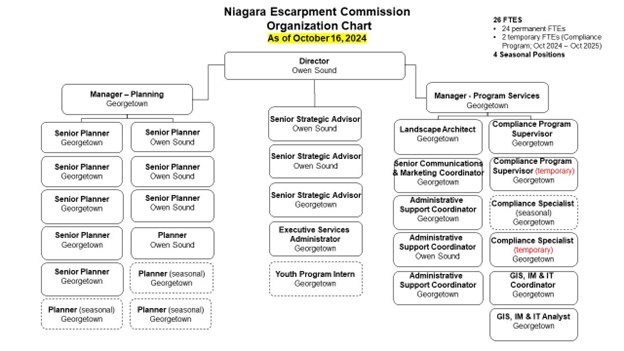
Figure 2: Organizational structure of MNR staff that support the NEC.
Beyond the formal structure, the NEC continues to rely on a team-based service delivery model. Through the model, multi-functional teams are assigned to geographically based client groups to deliver the full range of NEC services. There are three teams – one for each of the southern, central, and northern portions of the NEP area. The original driver for the team-based approach was to improve customer service by increasing collaboration, sharing workload through efficient and consistent triaging, and providing a forum to facilitate knowledge transfer and collaboration amongst NEC staff and with regulatory partners.
Regular team meetings are carried out to ensure staff have a network of support, as well as a process to highlight issues and obtain assistance from colleagues. In addition, these highly functioning teams support the onboarding of new staff and provide mentorship in a manner that may not otherwise have been possible. Beyond specific geographical team meetings, quarterly cross team meetings are held to further enable consistency in approach, knowledge transfer and collaboration and general support.
4. Priorities for 2025-2028
The NEC’s first Operational Strategy was released in 2017. It provided a foundation for organizational renewal and focus following the 2015-2017 Coordinated Plan Review. Through strategic review of NEC business in spring of 2024 it was determined that the key priorities areas are as follows: 1) Organizational Leadership 2) Service Delivery Excellence and Modernization; and 3) Natural Resource Management and Economic Development. These priorities align with broader MNR focus areas and include tasks related to outcomes of a strategic session held between Commission and NEC staff in June 2024. It was also determined that additional focus on workplace culture and alignment to broader OPS initiatives was needed. More details are provided below.
4.1 Organizational Leadership
4.1.1 Attraction, Retention and Employee Engagement
As with many other organizations across the province, the NEC is experiencing challenges attracting and retaining employees and continues to experience moderate to high turnover. A key area of focus for 2025 – 2028 will be on efforts that support stabilizing NEC’s staffing contingent and connecting NEC staff with MNR colleagues, supports and training opportunities.
The Ontario Public Service has established a blueprint to address the fundamentals of attracting, developing, and retaining the talent needed to serve Ontarians with inclusion, integrity, and excellence.
Inclusion: Respecting the dignity and human rights of every person so they feel welcomed, valued, and like they belong
Integrity: Demonstrating trust, honesty, accountability, and impartiality
Excellence: Delivering high quality and timely public services and programs
The NEC supports the OPS People Plan and is striving to meet the goals of the plan with a focus on workplace culture, modern work, and staff growth and development, building on achievements to date and enhancing over the next few years.
As with many other organizations, the NEC is experiencing a turnover of staff on a frequent basis. It is therefore important that staff are provided a solid foundation of support through capacity building, mentoring, coaching and learning and development opportunities to ensure their success in meeting the requirements of their roles and the provision of excellence in customer service. Each staff person works with their manager to develop a learning plan and where learning needs appear to cross a number of individuals, a collective approach to training has been provided. This will continue over the next 3 years. In 2025, the NEC will be implementing a formal succession planning process in conjunction with MNR and the broader OPS. An emphasis continues to be placed on cross team discussions as a forum to bring forward issues and problem solving as well as to ensure consistency in approach to implementation of the NEP and NEPDA. The NEC has also instituted monthly staff meetings as a means of providing broader awareness of the functions of the ministry, work of partners and other agencies and broader OPS initiatives. Individual learning and development including succession planning will also continue finding opportunities through MNR programs (for example, the Diversity Career Champions Program; the Leadership Development Program), broader OPS programs, job shadowing, opportunities through stakeholders and partners.
4.1.2 Health and Safety Program
Joint Health and Safety Committees (JHSCs) are composed of both worker and management members. They are required at any work location that regularly employs 20 or more workers, as part of Occupational Health and Safety Act requirements. The NEC has a JHSC that undertakes monthly office and vehicle inspections, conducts an annual review on office emergency plans and Hazard Identification & Risk Assessments, and meets quarterly to review and discuss arising business. Monthly meetings also include a brief training session on various health and safety topics.
4.1.3 NEC Organizational Enhancements
NEC continues to assess needs and identify actions to improve or enhance the operation of the organization and find areas for innovation and improvements. NEC will continue to assess capacity needs and develop solutions. In addition, NEC will seek opportunities for collaboration with other divisions, branches and sections of MNR to leverage capacity within the organization while continuing to work closely with other agencies to deliver on core business.
4.2 Service Delivery Excellence and Modernization
The NEC continues to examine the current business processes and tools that guide operational programs and to improve client service though a variety of planned actions and initiatives. Priority focus will be on a customer centered delivery of NEC programs, services and experiences and full implementation of the new NEC information management platform. NEC will continue to learn about and consider other digital first approaches while further developing a lean culture to ensure all NEC services are delivered efficiently and effectively.
4.2.1 Commission Support
Following consultation between staff and Commissioners, NEC has worked to strengthen the support it gives to members of the Commission to aid their decision-making as it relates to implementation of the NEP.
Of note, NEC has implemented and maintained the following initiatives to assist in these matters:
- An online portal dedicated to the needs of Commissioners. This new web resource includes an ever-growing list of onboarding and training materials and updated agendas and associated documentation for ease of access;
- Commission Report Revision: Staff reviewed its current template to improve information regarding decision discretion, options and considerations as they relate to implementation of the NEP;
- Commission Meeting Process and Procedures: Staff established a new timeline and fine-tuned procedural guidelines and associated guidelines;
- Revised Onboarding and Orientation Materials: Information focuses on roles and responsibilities, the appointment process, onboarding and identifies training gaps (public-at-large/municipally appointed/chair), provision of training opportunities during commission meetings, general training on policies of the NEP, etc.); and,
- Enhanced collaboration: A review was undertaken to identify opportunities for staff and Commissioners to interact through working groups or events to enhance the shared understanding and collaboration for implementing the NEP.
4.2.2 Enhance Customer Service
The NEC continues to identify opportunities to improve service delivery and create efficiencies in processes to provide enhanced client service. In response to the At Your Service Act (2022), the NEC will develop and implement service delivery standards for Development Permit Applications in 2025, to improve service and enhance transparency and accountability. As part of this, the NEC will also undertake a comprehensive review of the Development Permit application review and decision-making process, to identify opportunities for efficiencies, modernization and burden reduction, as well as areas that lack transparency and require development of new or updated guidance materials.
Other priority service delivery projects involve providing stakeholders, partner municipalities and members of the public with improved access to information about the NEPDA, its regulations and the NEP, as well as greater clarity on Development Permit application process and requirements, without needing to travel to an NEC office. Although the NEC continues to offer in-person services, including pre-consultation services for Development Permit Applications where requested, the NEC is seeking to provide more transparency and make information more readily accessible from anywhere, on any device, at any time.
4.2.3 IT Modernization
The NEC makes use of a suite of IT tools and services to deliver its business, ranging from the IT equipment used to host monthly Commission meetings and broadcast to remote participants, to the Information System used to receive online permit applications and track their progression through NEC review processes, to the online mapping tool that enables users to determine whether a property is within the NEP area. Internally, NEC staff use a variety of additional IT-related tools, including databases, geomatics, software.
Over the next three years, the NEC will continue to explore opportunities for efficiency and modernization in these areas, with particular focus on ongoing client-centric improvements to it’s online application portal (NEC Info System), use of automation and Artificial Intelligence (AI) to reduce burden, and new or updated mapping and geomatics products to support clients and NEC staff.
4.2.4 Business Process Improvements
The NEC is initiating or continuing a number of initiatives over the next three years to modernize and, where possible, streamline business processes to improve stakeholder and applicant experience and increase agency transparency. These improvements include:
- Modernized, accessible application forms;
- Review and update the Development Permit application process;
- Improving public access to information on policies and procedures related to the NEPDA, the NEP and the Development Permit Application process (e.g., application stages, process and approximate timelines) via the NEC website;
- Creation of new internal procedures (e.g., information management, participation in Ontario Land Tribunals) to support agency transparency as well as onboarding of new NEC staff and Commissioners;
- Assessment of existing processes for reviewing land use planning applications and environmental assessments received from partner ministries and external agencies to ensure development considers the objectives of the NEPDA and conforms to the policies of NEP where required;
- Strengthen relationships with partner ministries and agencies to share information, build knowledge and enhance collaboration; and,
- Creation of new guideline and procedure documents to support public participation in Commission meetings and other business areas.
4.3 Natural Resources Management and Economic Development
4.3.1 Marketing and Outreach Strategy
NEC continues to implement a progressive outreach strategy designed in 2022, which has three core goals:
- Raise awareness about the NEC and keep members of the public informed about Commission activities;
- Foster collaboration and engagement with ministries, municipalities, agencies, stakeholders, Indigenous communities and other groups; and,
- Provide easy access to information related to the Niagara Escarpment Planning & Development Act, the NEP, and all associated policies, procedures, and processes.
This strategy continues to inform how the NEC interacts with clients, ministry stakeholders, members of the public and Indigenous communities along the Niagara Escarpment. The NEC will continue to seek out public outreach opportunities, where staff can engage with and hear from landowners, businesses, stakeholders and agencies along the escarpment. The NEC will also continue offering information and outreach sessions on the NEPDA and NEP to municipalities and Conservation Authorities, who’s land use planning responsibilities overlap with the NEP area.
To promote greater access to information for all Ontarians, the NEC plans to continue with website improvements over the next three years that will enable access to greater information regarding interpretation of NEP policies, provide plain language information on activities exempt from requiring a Development Permit, and provide greater clarity on the process, stages and timelines associated with Development Permit Applications.
4.3.2 Monitoring the Niagara Escarpment
The NEC will formalize a high-level approach to monitoring the effectiveness of the policies of the NEP in meeting plan objectives, and to inform future policy updates. The approach will:
- Identify Targets based on plan Objectives; and,
- Identify existing (known) and additional Performance Indicators that can be monitored using existing (and modified) programs and data sets and will align the Indicators and associated Targets with specific NEP policies that could be assessed by each.
The NEC will collaborate with the MNR Science and Research Branch to obtain and analyse two data sets:
- Southern Ontario Land Resource Information System (SOLRIS) satellite imagery data taken in 5-year increments starting in the year 2000 (baseline) illustrating and quantifying changes in land use by vegetation cover with comparisons to areas adjacent to the NEP; and,
- Connectivity data and analysis derived from a modeling program called Circuitscape to compare the ease at which wildlife can move through the landscape of the NEP in comparison to lands outside and adjacent to the NEP. This will evaluate the plans policies in protecting the natural heritage system and maintaining connectivity.
The NEC will then report on the results through the NEC website including mapping and written reports, structuring reports in the context of the Performance Indicators and Targets at a landscape level. This work will evaluate landscape changes in natural heritage, agricultural and more intensive land uses (e.g., urban intensification).
The NEC will also explore collaboration and partnership opportunities with external organizations, such as the Greenbelt Foundation or the Niagara Escarpment Biosphere Network, to collaborate on and participate in landscape level monitoring initiatives.
4.3.3 Renewed Compliance Strategy
Compliance is a core function of the NEC’s legislative and regulatory responsibilities. NEC’s Compliance Program is designed to ensure that:
- The purpose and objectives of NEPDA are upheld;
- Development occurs in a manner consistent with conditions of a Development Permit; and,
- Appropriate action is taken to address and remediate development occurring without a permit, particularly where there are public safety and/or environmental risks.
The NEC takes a risk-based approach to compliance with the NEPDA, meaning it makes strategic, risk-informed decisions about compliance priorities and responses. The NEC, in consultation with MNR Enforcement Branch, uses this approach to determine the most appropriate response to compliance issues from a suite of options along a compliance continuum.
The NEC will continue to develop and enhance strategies that effectively triage reports of non-compliance and inquiries, provide broader education on the NEPDA and permitting, encourage voluntary compliance, and enable effective collaboration with MNR staff. To support internal NEC processes, as well as provide greater agency transparency for landowners along the Escarpment and all Ontarians, the NEC will develop a Compliance Program Framework to clarify risk assessment tools and guide decision-making related to compliance approaches and actions. To support this undertaking while also enabling responsive action to address new reports of non-compliance (complaints), the NEC received two, temporary, one-year compliance positions in addition to its existing two positions (see subsection 3.2, above, for organizational structure).
As part of an ongoing outreach strategy, the NEC will continue to nurture and maintain positive, cooperative relationships with municipal and agency partners, through working groups, outreach opportunities and other means of building efficient and effective processes to address compliance issues of mutual interest.
Finally, NEC staff will continue to undertake annual compliance program planning to set strategic priorities, identify appropriate targets for performance measurement and identify opportunities for proactive compliance actions where appropriate.
4.3.4 Enhance Indigenous Engagement
The NEC acknowledges the important role Indigenous peoples and communities have played as stewards of the land and are committed to engaging to learn, recognize and hear the knowledge they provide NEC staff will be seeking opportunities for training from MNR and the broader OPS to increase awareness and develop new approaches to effective indigenous partnerships and engagement.
4.3.5 Effective Operational Guidance
The NEC has identified specific subject matter areas where new or revised technical guidance is required to further the implementation of NEC core business as well as provide clear and consistent direction to clients and the public. Technical guidance for NEC operations also ensures consistency in business processes as it relates to the application of NEC policies and information requirements to support decision making. Natural heritage, including species at risk, and water resources have been identified as key areas where guidance is needed to support NEC business processes and to support NEC staff in providing advice to clients, stakeholders and partner agencies.
In addition, existing technical guidance, such as Amendment Process Guidance, Visual Impact Technical Criteria, Landscape Plan Technical Criteria are to be reviewed to ensure effectiveness and to identify opportunities for improvement or revisions.
4.3.6 Modernized and Streamlined Legislation / Regulations/ Plan
The NEC is regularly analyzing its broader legislative and regulatory framework, in concert with the MNR Policy Division, for opportunities to make amendments that may further streamline development permit reviews and exemptions, improving service to NEC clients, and supporting housing initiatives while balancing compatible development with the policies of the NEP.
Under the Less Red Tape, More Common Sense Act, 2023, the government has made revisions to the NEPDA that are designed to enhance efficiency and better meet the needs of our clients and communities. These changes, which came into effect with the Royal Assent of Bill 139 on December 4, 2023, bring several benefits:
- Removed the requirement to publish notices in newspapers for Niagara Escarpment Plan (NEP) amendment proposals and associated hearings and instead required the publication of these notices on a Government of Ontario website or the NEC website, or as determined by the Hearing Officer.
- Expanded the Minister’s regulation-making powers to enable broader exemptions for low-risk activities.
- Broadened the range of compliance tools and powers to provide NEC staff with greater abilities to inspect and address non-compliant development activities.
These amendments to the NEPDA are part of our ongoing efforts to improve service delivery, reduce redundancies and administrative burdens, and broaden compliance tools for the NEC. By focusing on more complex applications and protection measures, the ministry has created more efficient processes. This not only saves time for applicants but also ensures the Escarpment’s protection is maintained.
In the spring of 2024, the ministry’s Policy Division consulted on potential updates to R.R.O. 1990, Regulation 828 to clarify, amend and expand existing exemptions for development that do not require a development permit under the Act and exempt additional activities that are unlikely to have a significant environmental impact. Public consultation on the proposal was completed in June 2024, and Policy Division is considering the comments received and working to complete updates to the regulation.
Beyond the legislative and regulatory opportunities, the NEPDA requires a review of the NEP every ten years in coordination with the Greenbelt Plan and the Oak Ridges Moraine Conservation Plan. Since the last review began in 2015, the next review is anticipated to begin in 2025.
5. Performance Measures and Annual Performance Targets
Performance measures promote accountability and transparency of services. They also provide evidence that is used to recalibrate program delivery, enhance customer service, and identify program modifications/needs. The NEC’s priorities for the next three years are to provide valuable and responsive client services, support accountability and transparency, and be an inclusive organization where diversity and accessibility are fundamental values.
The NEC has established performance measures to help assess its success in achieving these priorities. By monitoring performance, the NEC can evaluate the effectiveness of policies, quality standards and/or practices in meeting its goals. Table 3 identifies performance measures for 2025-28.
In addition to operational performance measures for program delivery, the NEP identifies that performance indicators will be developed and performance monitoring will be undertaken by the Province, in coordination with the Greenbelt Plan and the Oak Ridges Moraine Conservation Plan in consultation with the NEC, municipalities, other public bodies and stakeholders, in order to demonstrate progress towards the implementation of the NEP policies.
The implementation of a modern, digital-based platform for receiving, processing, and issuing development permits and other program elements, will assist in the development of meaningful performance measures. It is expected that new performance measures will be identified and reported in association with the digital program implementation. Until then, the following performance measures continue to apply.
5.1 Organizational Leadership & Governance
Table 3 – Organizational Leadership & Governance Performance Measures for 2025-2028
|
Performance Measure |
Performance Target |
Activities / Outputs |
Outcomes |
|
Compliance with requirements for non-board governed agencies outlined in the Agencies & Appointments Directive (AAD). |
Business Plans and Annual Reports will be developed and submitted by the identified timeline 100% of the time.
Minister approved Business Plans and Annual Plans will be posted on the NEC website within 30 days of approval 100% of the time.
NEC will post its quarterly financial reporting on the NEC website 100% of the time. |
NEC staff to conduct periodic review of AAD to monitor and confirm compliance. NEC staff, Chair and Commission members have been trained on and are aware of OPS policies and directives.
MNR Legal Services Branch periodic attendance at Commission meetings to explain legislative and regulatory responsibilities. |
Public sector transparency and accountability.
Public access to information.
Responsible and accountable government. |
|
The Commission will meet on a regular basis throughout the year to ensure decisions related to development permits are consistent with the policies of the Niagara Escarpment Plan. |
The Commission requires quorum (nine members plus the Chair) to make decisions.
If the Commission does not have enough members to make quorum it will not be able to make decisions, which may result in backlogs due to deferral. |
Agendas and reports prepared for Commission meetings are publicly available through the NEC website.
Meetings are open to the public. Procedures on public participation at meetings are posted on the NEC website.
Meeting minutes reviewed / approved by NEC and posted on website. |
Public access to information.
Members of the public can engage with the Commission during decision-making.
Transparency of decisions.
Implementation of legislated responsibilities delegated from the Minister to the Commission. |
|
The Commission will make decisions independent of government. Decisions will be in accordance with the Niagara Escarpment Plan. |
The Commission will strive to ensure that all decisions related to applications and compliance-related issues are aligned with the policies of the Niagara Escarpment Plan. |
Commission continues to pursue fair and honest interpretation of the Niagara Escarpment Plan. |
Decisions by the Commission and Director are in accordance with the Memorandum of Understanding and the Delegation of Authority signed by Minister of Natural Resources and the NEC Chair. |
|
Compliance with requirements of the Occupational Health & Safety Act. |
The NEC will meet OHSA requirements 100% of the time. |
Workplace training for all staff (e.g., WHMIS), provision of appropriate personal protective equipment, annual review of Hazard Identification & Risk Assessment materials and Workplace Violence Risk Assessment materials, annual review and training on emergency evacuation procedures, first aid training. |
NEC staff are aware of risks associated with their work and are able to undertake that work safely, without injury.
NEC staff know relevant processes and procedures in the event of an emergency or injury.
Commissioners and visitors are able to attend the NEC offices safely, without injury. |
5.2 Effective Implementation of NEC Policies
Table 4 – Effective Implementation of NEC Policies Performance Measures for 2025-2028
|
Key Priority Areas |
Performance Measure |
Performance Target |
Activities / Outputs |
Outcomes |
|
Development Permit Applications |
A majority of the NEC’s business is conducted through processing Development Permit Applications.
Effective operation is critical to implementation of the NEP.
Processing times vary for various reasons, including application complexity, delays in obtaining agency comments, and additional information requirements.
Performance measures aim to optimize efficiency of the aspect of the process that are within NEC’s control. |
New applications recorded and opened within 3 business days of receipt. |
Auto responses to initial applications.
Staff committing to the service standards laid out by the Ontario Public Service. |
Modern, digital processes that meet client needs.
Identification of applications that are exempt from requiring a permit and streamlining of applications of less risk activities.
Legislative requirements met. |
|
Niagara Escarpment Plan Amendments |
NEP Amendments are more substantive and follow a more complex process than Development Permits.
Processing times vary depending on the complexity of the application, whether enough information is provided, whether a hearing is required and timelines for Minister decision.
Performance measures aim to optimize efficiency of the aspect of the process that are within NEC’s control. |
NEC staff follow NEPDA requirements for processing Plan Amendments. |
Applicants provided with information regarding the status of the Amendment application.
Amendments posted on the NEC’s website, including their status. |
Effective and efficient processes and decision making.
Public has high level of awareness of status of their application(s).
Legislative requirements met. |
|
Review of Applications under Planning Act |
Decisions by municipalities under the Planning Act are required to conform to the NEP.
The NEC is circulated a range of proposals and applications (e.g., official plans and amendments; zoning bylaws; consent applications; minor variances). |
NEC plays important role in ensuring alignment with the NEP, and to support municipalities in their planning functions. |
NEC comments provided to municipalities within due date (usually 30-60 days).
Municipalities have access to information on NEP policies, designations, and development control. |
Municipalities are aware of implications of decisions on the NEP.
Municipalities are supported and are partners in implementation of the NEP.
High level of awareness of NEP implementation. |
|
Management of Compliance Issues |
Compliance related inquiries and reports of non-compliance will be responded to as per OPS client service standards (e.g., 1 business day for voicemails, 2 business days for emails).
The Compliance Program uses a risk evaluation approach to triage and prioritize compliance activities through completion of an occurrence report for each situation. |
The NEC Compliance Program will respond within OPS Service Standards for 95% of compliance-related inquiries and complaints. |
Delivering on-time responses to compliance issues. |
High quality customer service. NEP and Development Control process effectively implemented.
Environmental impacts avoided or mitigated/ remedied. |
Table 5 –Service Delivery Excellence & Modernization Performance Measures for 2025-2028
|
Performance Measure |
Performance Target |
Activities / Outputs |
Outcomes |
|
Compliance with the OPS Client Service Standards. |
NEC will respond within OPS Service Standards for 95% of all inquiries. |
In-person service is available Monday to Friday (excluding holidays), between 9:00 a.m. – 5:00 p.m.
Telephone calls are responded to within one (1) business day.
Emails and written correspondence are acknowledged within two (2) business days and a response if provided within five (5) to 15 business days.
|
High quality customer service. More efficient deliverance of the Development Permits. |
|
Compliance with the Human Rights Code and Ontarians with Disabilities Act. |
NEC will comply with the Human Rights Code and accessibility requirements 100% of the time in all services that are provided. |
An active offer of assistance and accommodation is provided with all communication. NEC will consider all requests for accommodation.
NEC website meets digital accessibility standards.
NEC Info System meets digital accessibility standards.
NEC offices meet in-person accessibility standards. |
High quality customer service.
NEC offerings are easily available to those with accessibility concerns. |
|
Compliance with the French Language Services Act. |
NEC will provide information and services in French as required by the FLSA 100% of the time. |
NEC website is available in English and French.
NEC Info System offers service in English and French.
Active offer to provide information or services in French, as requested. |
Accessible content for Francophones. |
|
The NEC will continue to add new information and make enhancements to the NEC website that support a client-focused approach to service. |
For the 2025-26 fiscal year, the NEC will focus on adding and enhancing information related to:
|
Staff develop strategies to best deliver the content.
Staff produce web assets to assist in delivering these products. |
Public access to data and information.
Informed and engaged clients and partners.
Public able to ‘self serve’ and obtain relevant information directly from website. |
6. Risk Assessment & Mitigation Strategies
The NEC has identified various risks to operations for the years 2025 to 2028. These risks include:
- strategic / policy / performance risks;
- governance / accountability / organizational risks;
- program / caseload / utilization risks;
- controllership / accounting risks;
- legal / contractual / compliance risks; and,
- information / information technology risks.
The NEC has also established mitigation plans to address each risk identified as medium-high or high (see Table 6 below). For low to medium risks, the NEC has existing internal controls and mitigation measures in place to manage those risks.
Table 6 – Risks Identified & Mitigation Strategies for 2025-28
|
Risk Title |
Risk |
Key Information |
Risk Mitigation Plan |
Status of Risk Mitigation Plan |
|
Financial |
Expenditures exceed financial allocation from MNR. |
Context: NEC’s annual expenditures have exceeded its allocation for multiple years. The risk ranking below considers salary costs for 26 FTEs, a Commission projected to operate with full appointments (17) and meet monthly (10-11 meetings annually), operational costs for two offices, maintenance of four fleet vehicles, and the addition of annual maintenance and licensing costs for the new IT system launched in early 2024.
Likelihood of Risk: Almost certain Impact of Risk: Low. Control can be/ has been managed by NEC and MNR. Risk Assessment: Medium |
Not Required.
The NEC will continue to manage its financial allocation responsibly as per OPS directives.
The NEC will continue to keep MNR informed of financial pressures and required expenditures and seek approvals as needed to support required business. |
N/A |
|
Governance |
Delays with appointments resulting in insufficient number of Commissioners to make quorum. |
Context: The Commission requires quorum (nine members plus the Chair) to make decisions. If the Commission does not have enough members to make quorum it will not be able to make decisions, which may result in backlogs due to deferral.
Likelihood of Risk: Rare Impact of Risk: Moderate impact to reputation if it occurs. Risk Assessment: Low |
Not Required.
The NEC will continue to work closely with MNR to ensure Commissioner term timeframes and risk of delayed appointments is communicated. |
N/A
|
|
Stakeholder |
Agency does not meet the expectations of stakeholders. |
Context: The NEC continues to receive complaints related to development permit application review and decision timelines, lack of communication and lack of clarity on application requirements and process.
Likelihood of Risk: Likely Impact of Risk: Some impact to agency reputation. Some impacts on achieving objectives. Risk Assessment: Medium |
Not Required.
The NEC will continue to prioritize attraction and retention activities so that staff positions are filled and new employees are onboarded and trained to support implementation of NEC’s business.
Additional emphasis and training will be occurring in 2024-25 and 2025-26 related to service delivery excellence, people-centric services and implementing proactive communication approaches with applicants, stakeholders and Indigenous communities.
The NEC also continues to undertake a number of initiatives related to business process modernization, to improve service delivery. |
N/A |
|
Indigenous Communities |
Agency does not meet the expectations of Indigenous communities. |
Context: The NEC has a duty to consult where a statutory decision may impact Aboriginal and/or treaty rights.
Likelihood of Risk: Likely Impact of Risk: Crown Duty to Consult (legal requirement), impact to agency reputation, impacts on achieving objectives. Risk Assessment: Medium |
Not Required.
The NEC will continue to prioritize attraction and retention activities so that staff positions are filled and new employees are onboarded and trained to support implementation of NEC’s business.
The NEC will continue to seek advice from and partner collaboratively with MNR on engagement or notification of Indigenous communities. |
|
|
Information Technology (IT) |
NEC Information System fails in a capacity that impacts Development Permit database. |
Context: The NEC recently completed a three-year IT Modernization Project, which resulted in the launch of a new, state of the art IT system in March 2024. Up until 2024, the risk assessment for this column was significantly higher.
Likelihood of Risk: Rare Impact of Risk: Insignificant Risk Assessment: Low |
Not Required.
The NEC will continue to support maintenance and enhancements to the new IT System, so that the system continues to function as intended and does not become obsolete. |
N/A |
|
Information Technology (IT) |
Failure of or security breach to NEC Information System. |
Likelihood of Risk: Rare Impact of Risk: Medium Risk Assessment: Medium |
In the event of a system failure or shut down, the NEC has a maintenance agreement in place that will result in needed repairs to the system being completed within several business days. During that time, NEC can continue to process applications, track progress manually and communicate with applicants via email.
The NEC has multiple security controls in place to prevent a security breach of the NEC Information System. The OPS has privacy breach protocols that would be implemented if an event occurred. |
In Progress |
|
Regulatory Error
|
NEC implements polices from other organizations as an approval agency. |
Context: Errors in the area identified within Development Control results in NEC being the Land Use Planning Authority in areas outside of the NEP where Municipalities should be the lead. Results in planning decisions where there is no policy framework to support decisions and confusion and delays for landowners.
Likelihood of Risk: Likely in some limited areas Impact of Risk: Low Risk Assessment: Low |
Not Required.
NEC staff and Commission advocate for Regulation 826 to be revised as part of the NEP update.
NEC staff continue to work with partner agencies to implement and comply with the NEP policies where they can be applied by the agency that has jurisdictional authority over approval of development. |
N/A |
|
Compliance |
Development that is not compatible with the NEPDA and NEP will occur because the NEC does not have the resources to address every instance of non-compliance along the Niagara Escarpment. |
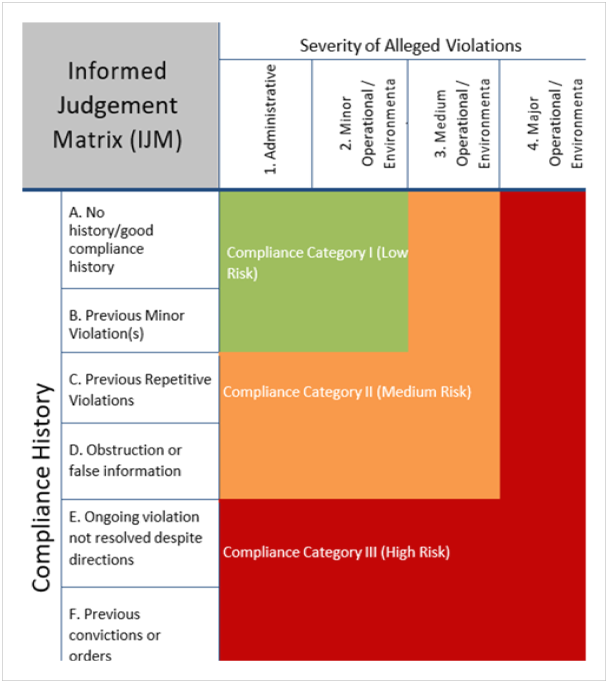
Context: The NEC’s compliance program utilizes an Informed Judgement Matrix to assess situations of non-compliance. There is a risk that NEC will not be able to address all reports of non-compliance and development that is not compatible with the NEP will occur.
Likelihood of Risk: Certain Impact of Risk: Low Risk Assessment: Medium |
Not Required.
Implement established risk-based approach to compliance and work collaboratively with MNR and other partner agencies to implement integrated compliance actions effectively and efficiently.
Continue to develop and enhance compliance policies and procedures to address a range of compliance situations.
Continue to support outreach and education opportunities to raise awareness of the requirements of the NEPDA and NEP. |
N/A |
7. Inventory of NEC’s Artificial Intelligence (AI) Use
Although the benefits of Artificial Intelligence (AI) are widely recognized as a means to find new efficiencies, it is important to consider the risks before using them. Although this is an emerging field for the Ontario government and associated agencies, the OPS has several guidance documents, including the Trustworthy Artificial Intelligence (AI) Framework and the Principles for Ethical Use of AI, to support the consideration of risks and application of best practices in the field of AI. The NEC fully supports the consideration and use of the OPS AI principles, practices and processes to guide the responsible use of AI in the services it provides.
The NEC currently uses AI in a minimal way:
- By utilizing industry-leading AI technology to deliver immediate translation of its website from English to French; and
- NEC staff have access to Microsoft Copilot Chat which is an OPS-approved web-based generative AI digital assistant. However, at this time, the NEC does not make use of this AI tool for anything other than enhanced learning (i.e., clarifying complex concepts into concise explanations).
Over the next three years, the NEC intends to consider opportunities to integrate AI into the services it provides Ontarians, to find new efficiencies in service delivery and support NEC clients with plain language learning related to the NEPDA and NEP.
Appendix 1 – Municipalities within the NEP Area
- NIAGARA REGION
(Seven local municipalities)
Town of Grimsby
Town of Lincoln
City of Niagara Falls
Town of Niagara-On-The-Lake
Town of Pelham
City of St. Catharines
City of Thorold
- CITY OF HAMILTON
- HALTON REGION
(Three local municipalities)
City of Burlington
Town of Halton Hills
Town of Milton
- REGION OF PEEL
(One local municipality)
Town of Caledon
- COUNTY OF GREY
(Six local municipalities)
City of Owen Sound
Municipality of Meaford
Township of Georgian Bluffs
Municipality of Grey Highlands
Township of Chatsworth
Town of The Blue Mountains
- COUNTY OF SIMCOE
(One local municipality)
Township of Clearview
- COUNTY OF DUFFERIN
(Two local municipalities)
Town of Mono
Township of Mulmur
- BRUCE COUNTY
(Two local municipalities)
Town of South Bruce Peninsula
Municipality of Northern Bruce Peninsula
Appendix 2 – Informed Judgement Matrix for Compliance